
Ajna
Third Eye Chakra ~ To Perceive Wisdom
Element: None (Mind)
Color: White
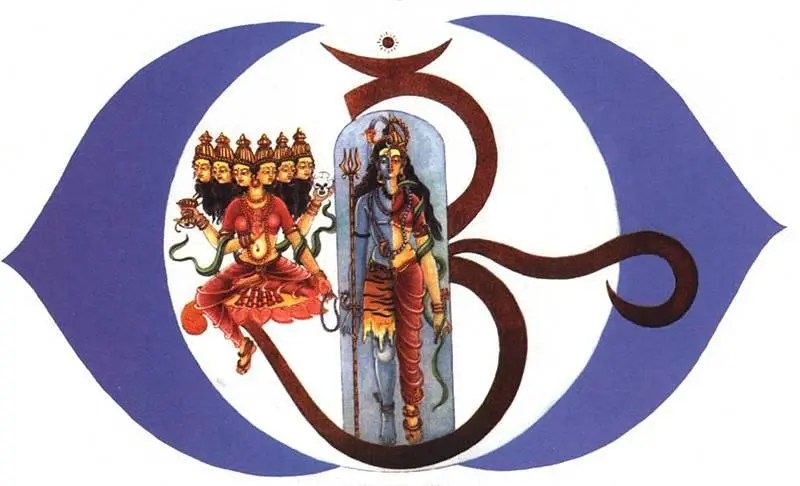
Yantra/Symbol: Two blue lotus petals. Om symbol in the middle. Two deities. The androgenous being is Ardhanarishvara: the Hindu deity that combines the male God Shiva and the female Goddess Parvati (Shakti)
Bija Mantra (activator): Aum (Om) – Primordial sound of the universe
Attributes: Authority, command, divine wisdom, dream world, deep meditation, intuition, insight
Physical body: Pineal gland, forehead, nose, eyes, brow bone, medulla oblongata, pituitary glands, hypothalamus
Part one – inner work: start asking the questions
In the Birth of the Chakras, Shive and Shakti were united in the crown chakra, The were completely undifferentiated until Shakti gained desire to experience herself as divided from Shiva. The Chakras became the footsteps of Shakti leading away from and back to Shiva.
Ajna Chakra is the realm where there is no longer physicality. It is true meditation. The first five chakras remain in the physical realm.
The task of the yogi is to re-ignite and invigorate the shakti energy from the root upwards to merge back up into Shiva so that a unification can happen as you move into the crown.
The root of Ajna, jna, is wisdom. (Gee-ya) Such as:
Jnana Yoga: The yoga of wisdom
Vijnanamaya kosha: The wisdom layer of the body
Part two: implementing behaviours in daily life that reflect on inner work
Deep meditation: Focusing on the physical becoming non-physical.
This may be an arduous task as one must re-direct their nervous system. There are some sadhanas that place their bodies in physical practices for 10+ years to achieve this state.
Move beyond all desires that motivate your life – moving away from physicality – into the spiritual realm.
Practice faith and confidence within ourselves. It is normal and natural to shift through a non-physical experience, although it takes time, effort and presence.
Affirmations:
“My mind is clear, focused and sharp”
“I am connected to universal consciousness and divine intelligence”
Postures
Headstand
Plough
Lotus pose
Childs pose (with pressure on the third eye)
Downward dog
Dolphin
Eagle
Legs up the wall
Trāṭaka – single pointed gaze. Stare at a black dot on a blank wall or a candle flame without blinking. (1 minute or more)
 earthcitysoul.com